

The Rise of Club Baseball and Its Uniforms
Throughout the years, club baseball has seen a surge in popularity across America. Once considered an alternative to school-affiliated baseball, it now offers a path for athletes aiming to compete at a higher level. Club baseball provides benefits that school baseball does not, especially in uniforms and apparel. It has embraced creativity and branding beyond what many traditional programs allow. This blog will explore the differences between leagues, uniforms, and what club baseball really is.
What Is Club Baseball?
Club baseball, which is commonly referred to as travel baseball, is another competitive version of the sport where players join independently organized baseball teams. In this type of baseball, teams play in tournaments rather than head-to-head games in traditional leagues. Teams get formed through tryouts run privately by coaches or organizations that aren’t tied to a specific institution, unlike school-based programs.
Teams can consist of players from various schools and regions, creating a melting pot of elite talent of players trying to seriously improve their game. Club baseball is great for development, exposure to coaches of the next level, and high-performance games. As mentioned above, a key difference between club baseball and traditional baseball is the tournament-style games. These tournaments typically last a full weekend with the championship game on Sunday. This format calls for multiple games to be played in a short period of time, leading to playoff brackets for each age group. Many athletes consider club baseball as a stepping stone to the next level of baseball. This version of baseball provides valuable opportunities and a way for athletes to stay competitive throughout the summer months until school ball starts again.
Club Baseball vs. Traditional Baseball: Key Differences
While club baseball and traditional baseball share the same foundation, the overall structure and experience between the two are very different. One of the biggest distinctions is organizational structure. Traditional baseball programs are tied directly to colleges or high schools, meaning teams operate within strict guidelines set by athletic departments and governing bodies. Everything from scheduling to uniforms is often regulated and approved at the institutional level. Club baseball teams, on the other hand, are independently run, giving them far more flexibility in how they operate.
Resources and funding also play a major role. The NCAA is one of the biggest sports organizations around, and programs typically have access to school-funded budgets, sponsorships, and brand partnerships, which often influence the apparel they wear. The addition of NIL has also changed the way teams manage brands and players. Many college teams partner with major athletic brands, resulting in more standardized uniform designs that align with the school’s identity, and players will partner with non-competitors. Club baseball teams, on the other hand, are usually funded by player fees, sponsors, or local support, which gives them more freedom but also more responsibility when it comes to customizing their gear.
Control over branding is another difference. Traditional team uniforms are anchored in a school’s colors and logo, restricting variation. Club baseball teams, lacking these limitations, can experiment with colors, logos, and styles to create a distinct identity that stands out at tournaments.
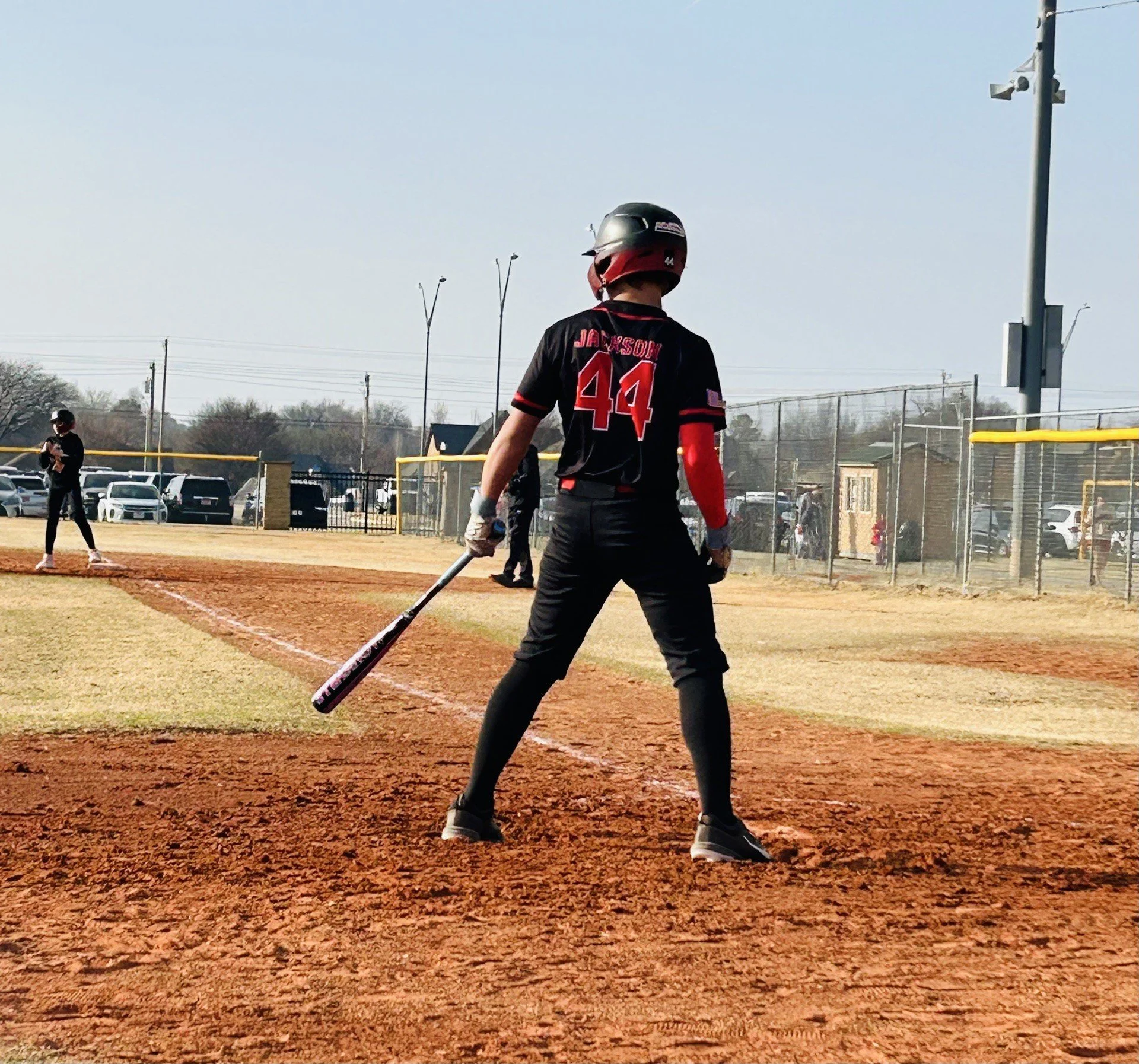
This team wanted a clean, simple look where the primary color is black with red accents. The gradient on the helmet is a nice touch to help pull the uniform together.
Why Apparel Matters More in Club Baseball
First impressions are incredibly important in club baseball tournaments. Teams are constantly being evaluated by coaches and opposing teams before the first pitch is even thrown. A clean uniform can communicate signals of professionalism, organization, and attention to detail to those watching an extremely competitive game. Your uniform can set the tone and give the team an early mental edge.
The uniforms in club baseball mean more to the team than the uniforms in traditional leagues do. Programs must rely on established branding from their school, whereas club teams can create a unique style custom to themselves. This can be beneficial to club teams since the uniform can influence an athlete’s confidence and performance. When players feel comfortable with what they’re wearing, it tends to translate into their gameplay. The "look good, feel good, play good” adage is proving to be true in club baseball, and it can reinforce team unity and boost the morale of each player.
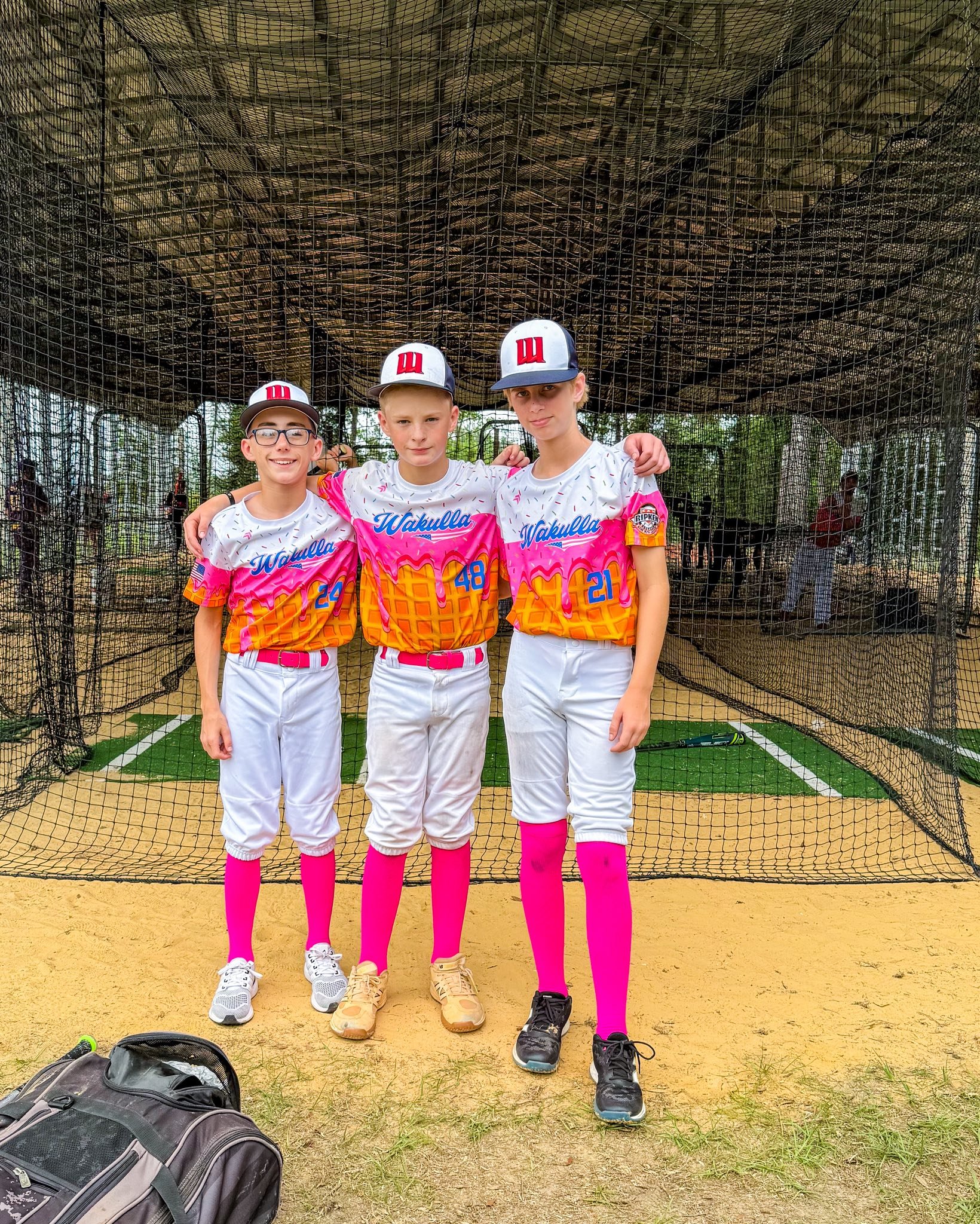
Here are some players from Wakulla highlighting their drippy ice cream uniforms.
Custom Uniform Options for Club Baseball Teams
Club baseball offers more freedom to teams when it comes to designing uniforms. Unlike traditional programs that must follow strict guidelines, club teams can customize every aspect of their uniform to reflect their identity.
The uniform begins with the most important aspect, the jersey. Teams often choose between full button-down jerseys and two-button styles depending on the look they are trying to achieve. The full button style offers a traditional baseball look, while two-button jerseys give a modern twist to create a lightweight, athletic feel for the players. Sublimated techniques are very prevalent nowadays as they can incorporate bold graphics and colors directly into the fabrics, keeping them lightweight while improving their durability and style.
Pants are another key element that can subtly elevate or ruin a team’s appearance. Teams first must decide what style of pants they want, whether it be knickers, tweeners, or full length. All of them are great options, but they each bring a different look to the table based on their overall length. Full length is exactly what it sounds like; these pants run the full length of the leg from your hips to your feet. Knickers stop right below the knee and are paired with tall socks, typically to add color to the lower body and help pull the uniform together. They are considered the old school look, and some teams choose to embrace that style. The final option is the tweener pants; these are a mix of full length and knicker pants that are popular amongst teens. They extend halfway between the knee and the ankle to show off the colored socks, but not too much leg.
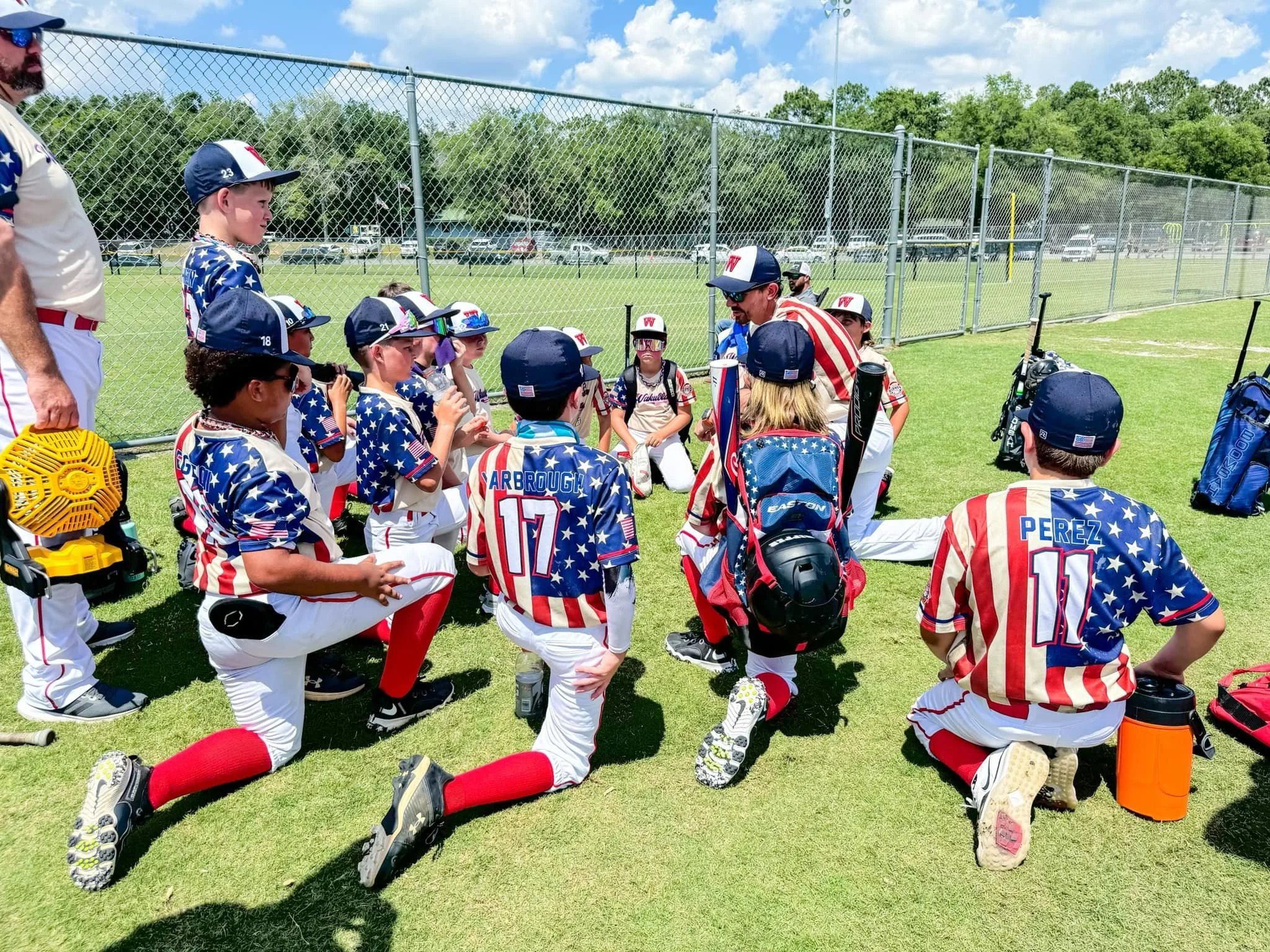
Here’s another example of the freedom allowed when designing a uniform. This team went for a half and half jersey where the front is a primary color, and the back is a completely different color or design. In this case the team wanted an American flag design which looks amazing!
Final Thoughts
As club baseball continues to surge into the baseball world, so does the importance of standing out in a competitive environment. It used to be primarily about development but has morphed into a unique experience of its own, highlighting performance and presentation. Teams today aren’t just competing for wins anymore; they’re competing for attention. Whether it’s the attention of a recruiter at the next level or simply just trying to get your name out there, every detail matters in this environment. Feel free to check out our store to create custom baseball gear for your team today!
